top of page


Faceless Others (Installation)


Concept
This work centres on enlarged sculptural heads that represent racial stereotypes rather than specific individuals. Through repetition and scale, it reflects how racism reduces people to simplified categories. The heads are installed within a metal frame and positioned in ways that suggest both being watched and watching one another, creating a network of mutual surveillance. A continuous mechanical hum, resembling strained vocalisation, introduces a sense of tension and discomfort, evoking the pressure of being seen, classified, and confined. The work constructs a dense, oppressive environment that foregrounds the experience of marginalisation.
Research / Process
Part one
This part of the work reflects on how the ethical “face” of the Other, as proposed by Levinas, is reduced to a surface of projection—transformed from a site of encounter into a fixed and categorised image.
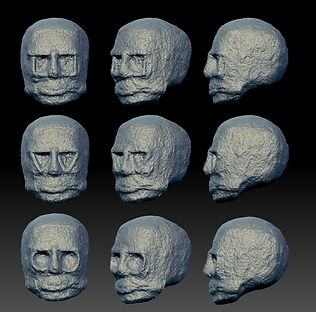
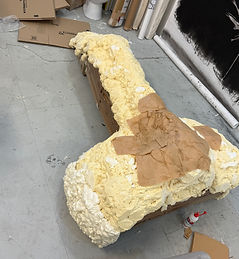
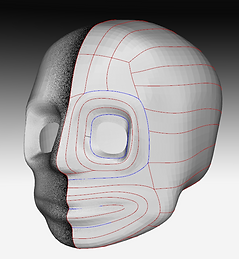
A sculpture made from cardboard, expanding foam, and paper (failed).
The 3D sculpture was divided into sections, with experiments using fabric to construct the model.


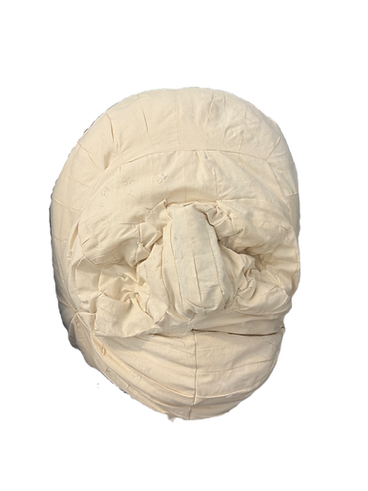

Cutting the fabric.
Assembling the fabric and testing the model.

Testing the final model.
After establishing the idea of simplifying and enlarging the human figure into racialised forms, the artist drew on Marshall McLuhan’s understanding of media to determine the material approach. Air blowers were used to animate fabric structures, allowing the medium itself to shape the work’s sensory experience. The inherent noise of the blowers produces a chaotic and crowded atmosphere, while the inflated, balloon-like forms generate a restless, overlapping sound—echoing both the noise of the city and the density of bodies in close proximity.

Part two
Metal frame concept sketch.
This section evokes congestion and noise, where enlarged heads and eyes form an overwhelming visual field. It reflects outsiders navigating survival within a dense, overcrowded space, where individuals are reduced to fixed identities. Contained within a large metal frame and transparent PVA membrane, the compressed heads suggest pressure and control.


Metal frame fabrication.
Assembling and installing the metal frame.
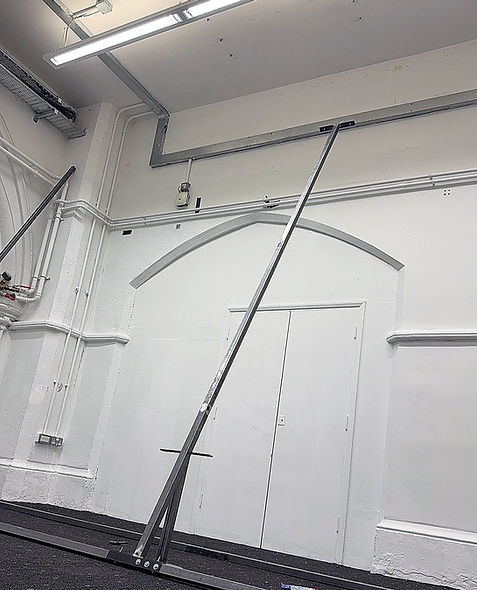


Assembling and installing the metal frame.

Part three
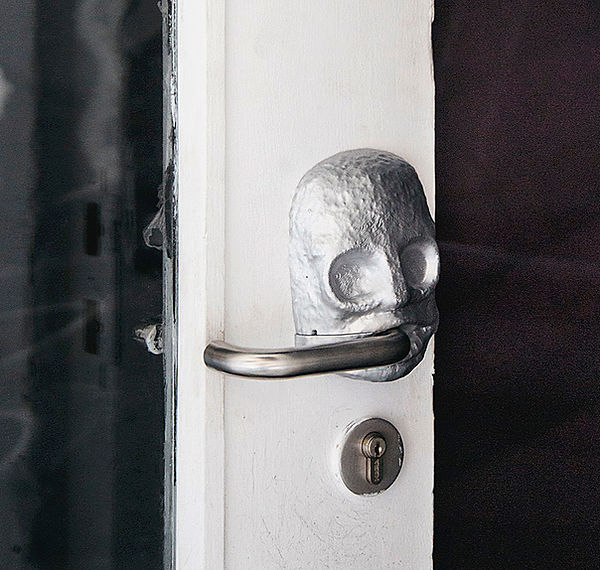
In this part of the work, additional faces and eyes are introduced, transforming living individuals into decorative elements akin to door handles. The role and status of the doorman are reduced and simplified into a fixed identity. Drawing on Foucault’s concept of discipline, the work reflects how control operates through visibility, where individuals are shaped, categorised, and regulated within systems of observation.


Modelling.

Modelling.
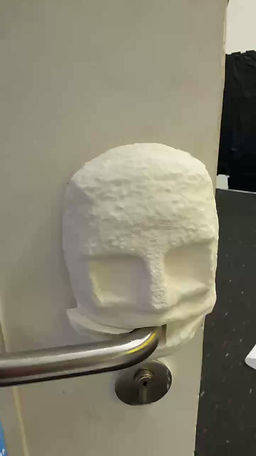

Testing.
Spray painting.
Reference
1. Butler, J. (2004) Precarious Life: The Powers of Mourning and Violence. London: Verso.
2. Levinas, E. (1969) Totality and Infinity: An Essay on Exteriority. Pittsburgh: Duquesne University Press.
3. Foucault, M. (1977) Discipline and Punish: The Birth of the Prison. London: Penguin.
4. McLuhan, M. (2001) Understanding Media: The Extensions of Man. London: Routledge.
bottom of page