


Before Raining
Concept
This work constructs a cyclical narrative that traces the transformation from a child’s innocence to violence, and from destruction to renewal. Beginning with children at play, a moment of conflict escalates into animalistic aggression, war, and eventual collapse, revealing violence not as an exception but as a recurring condition that operates across different scales.
The work also introduces the breakdown of value through money and survival. In a devastated landscape, economic systems collapse, and currency loses its meaning, exposing how human life becomes vulnerable within structures of power and exchange.
Rain functions as a central metaphor, symbolising both hardship and regeneration. While destruction reduces the world to emptiness, it also creates the conditions for new growth. Yet this renewal does not resolve conflict; instead, it returns to a continuous cycle of opposition and repetition.
Through this structure, the work questions whether civilisation can escape the persistence of violence, or whether destruction remains inseparable from its existence.
Research / Process
Character Design
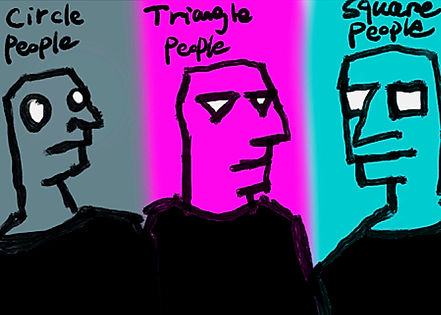
Created three different races and built a virtual world: pink humanoids with triangular eyes, green humanoids with square eyes, and gray humanoids with round eyes.
Storyboard
Storyboard

Beginning with children at play, the narrative unfolds into conflict, war, and collapse, revealing violence not as an exception but as a recurring condition. In this sense, the work resonates with Heraclitus’ idea of interdependent opposites, Sigmund Freud’ understanding of inherent human aggression, and Walter Benjamin’ view of history as a cycle of catastrophe. Through the metaphor of rain, the work further questions whether renewal can ever escape the repetition of conflict.