


Rewilding
Where one ends, many begin.
Including bamboo and pithy stems
such as elder and buddleia, are integrated to provide nesting spaces
for solitary bees.
Hollow Stems
( 3-8 mm Ø.10-15 cm length)


Sand-Clay Mix
Moss Cluster

Through carving, the surface integrates both drainage and localized shelter
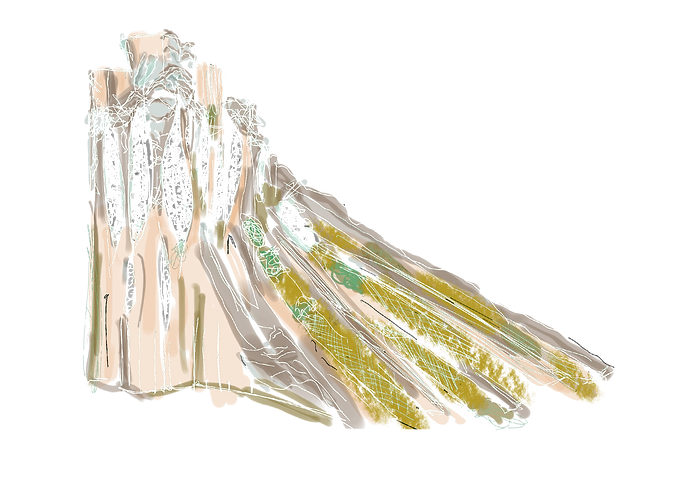
Through chainsaw cutting and bark stripping, the wood is shaped into a structural base with multiple cavities. The dense marks left by the chainsaw intensify the surface texture and stratification of the material, foregrounding its natural characteristics and materiality—its contingently formed roughness and uniqueness—while simultaneously creating drainage pathways that prevent rainwater from flowing back into the internal spaces used by insects for shelter, resting, and breeding.
Part of Deadwood
Retains moisture, creates a stable microclimate, and provides shelter for insects.
Allows insects to burrow without collapse.
Supports beetles (e.g. stag beetles), wood-boring insects, and larvae of decomposer species.


A 15° backward tilt prevents water accumulation and directs flow along carved grooves.
Multi-view 3D Sculpture

The design draws from eroded deadwood and the exposed solidity of its roots. Its point of departure is not a celebration of life, but an acknowledgement of death and decomposition.
The primary material is sourced from deadwood found within the local estate, typically oak or ash, reflecting locally available species.
The form is shaped through subtractive carving using chainsaws and woodworking tools, allowing for bark removal and the creation of carved surface grooves.
Depending on scale and feasibility, the structure may be produced as a single piece or assembled in sections.
A sand–clay mix and hollow or pithy stems are inserted into carved cavities to support nesting and habitat formation.
Concept Diagram
